

The principle of equality means that everyone receives the same support. But an equal, one size-fits all approach can still leave people unable to engage. This is not because services aren’t available, but because equality of opportunity doesn’t necessarily mean specific accessibility needs have been addressed.
Equity solves this instead. It recognises the importance of people’s own culture, environment, experience and personal barriers. Equality and equity both seek to maximise participation. But where equality gives everyone the same support, equity goes further by giving people support tailored to their own personal circumstances.
The need for an equity-focused approach is clear. In England, for example, there is a nearly 10-year gap in life expectancy between the most and least deprived communities, premature mortality from cardiovascular disease is four times higher in the most deprived areas, and people living with severe mental illness die on average 15–20 years earlier than the general population.
Core20PLUS5 is the NHS’s national approach to reducing health inequalities by targeting effort where it can have the greatest impact, focusing on the most deprived 20% of the population, alongside groups who experience poorer access or outcomes, and five key clinical areas where inequalities are most pronounced.
For many people who live within these priority groups - who may experience increased health inequalities, deprivation, practical, emotional, systemic and social disadvantages - the assumptions built into traditional programme structures, such as the ability to have regular routines, available finances or emotional capacity, do not hold true and can result in services feeling out of reach.
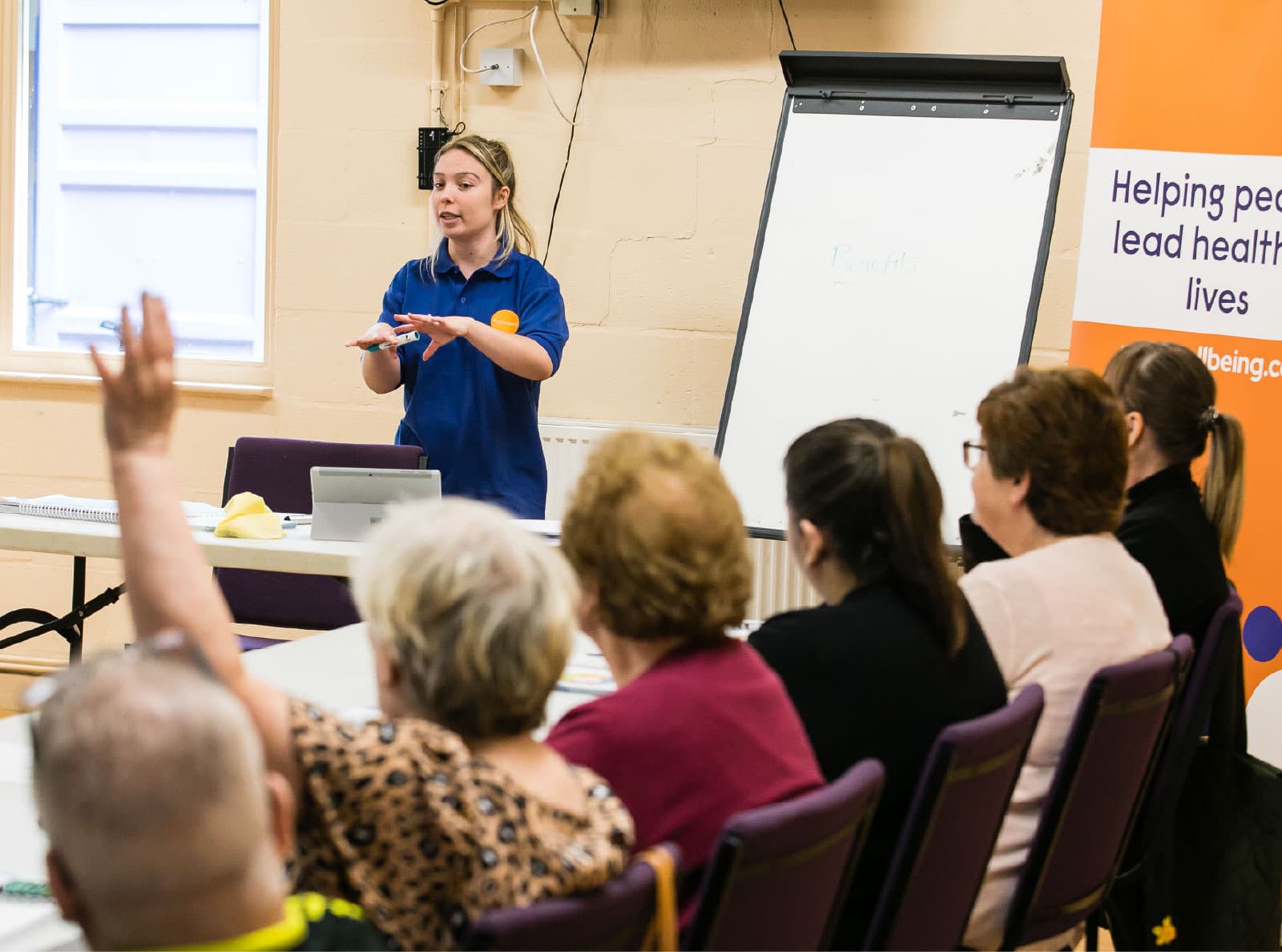
This approach shaped the development of our delivery of Healthier You: the NHS Diabetes Prevention Programme. Through a structured system of co-production, we engaged with target populations, clinical experts, specialists and practitioners to listen to lived and professional experiences and translate these insights into meaningful service design.
At Reed Wellbeing, co-production is a core principle of how we design, evaluate and continuously improve our services. Time and again, listening to lived experience reinforces a consistent truth: priority groups are not inherently hard to reach, but services can be hard to access. We use what we learn through co-production to shape support that is truly accessible.
Engaging priority groups
Our programmes are designed and delivered with trauma informed principles and promote autonomy, giving individuals choice and control to participate in ways that feel appropriate to them while being supported by our highly trained and inclusive workforce.
Working in partnership with organisations such as Royal National Institute of Blind People (RNIB), SignCore and Learning Disability Networks (LDN) means we can increase the inclusivity of our sessions. From pacing and format to communication, materials and delivery style, we create multiple ways for people to access our services and learn effectively.
A representative from RNIB reflected:
We worked closely with Reed Wellbeing to strengthen their programme, using early insight and leveraging lived experience feedback to shape improvements throughout the co-design phase. It’s been really positive to see Reed Wellbeing seek advice from the outset and build in reflection as the work progressed. We’d love to see more organisations take this approach, as involving people early leads to more accessible, engaging services.
Supporting people with gestational diabetes
Through targeted focus groups and ongoing engagement with our coaching communities, we explored both the specific barriers faced by individuals with gestational diabetes and the wider importance of cultural tailoring, particularly for Bangladeshi and Pakistani communities. Our work highlighted the realities of the postnatal period, including caring responsibilities and disrupted sleep, ensuring that our delivery of Healthier You is designed around people’s actual, rather than assumed, capacity. Alongside this, our insights into cultural context reinforced how language, health beliefs, dietary norms and family dynamics can significantly shape behaviour.
Beyond structured sessions, we’ve created a range of practical and simple resources that people can come back to whenever it suits them. From culturally tailored recipe guides to simple, flexible tracking tools participants can keep track in a way that feels right for them.
Supporting people with severe mental illness
Our work in Greater Manchester with participants living with severe mental illness (SMI) provided us with a powerful example of how improving access and outcomes for priority groups requires services to be designed thoughtfully and intentionally.
Our NHS England commissioned pilot in 2024, evaluated by Rochdale Borough Council and in collaboration with a multi system team, highlighted that people living with SMI face significantly poorer physical health outcomes, alongside cognitive, structural and social barriers to engaging in standard prevention programmes.
Lucy Archer, our Senior Health & Wellbeing Manager, led a series of targeted, co-produced adaptations to better meet these needs. The adaptations included smaller group sizes to reduce anxiety, longer sessions with planned breaks to support concentration, more flexible referral pathways to increase uptake, and stronger integration with mental health services to build trust and continuity.
These changes directly addressed barriers to engagement, and the impact was clear: participants who completed the programme demonstrated meaningful improvements in their health, including more consistent weight loss, improved understanding of diabetes and positive lifestyle behaviour change.
This case study demonstrated that when services are tailored to the realities of people’s lives, access improves, and we create a stronger foundation for achieving better and more equitable health outcomes.
Looking forward
The common understanding of the benefits of equity over equality have taken greater precedent in recent years across health and wellbeing services. Alongside this general sentiment, rapid improvements in technology are enabling greater levels of analysis and customisation in important service design considerations like communications, access options and intervention types. The future of NHS Diabetes Prevention services could see even more innovation in this area trialled, with the aim of continuing to improve outcomes for participants, particularly where health inequalities exist.