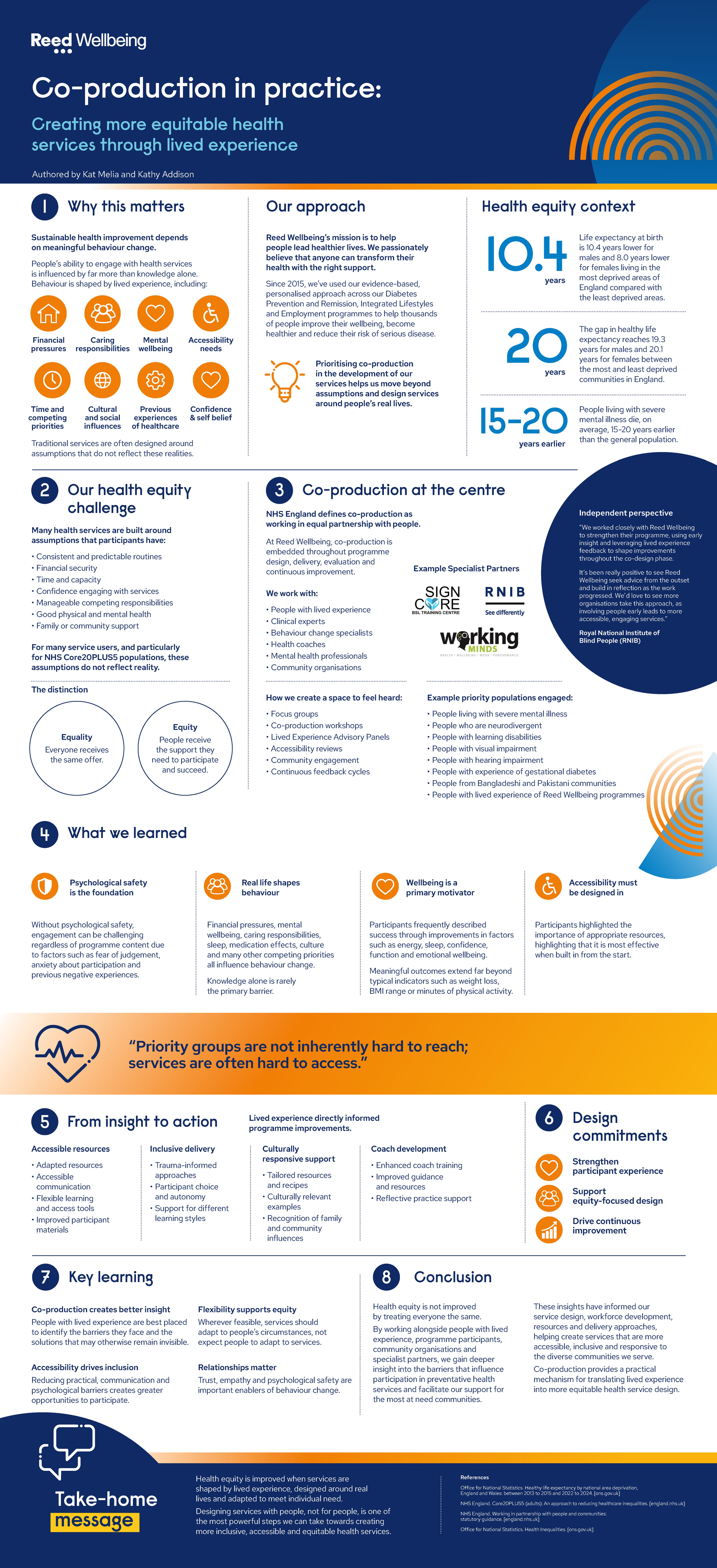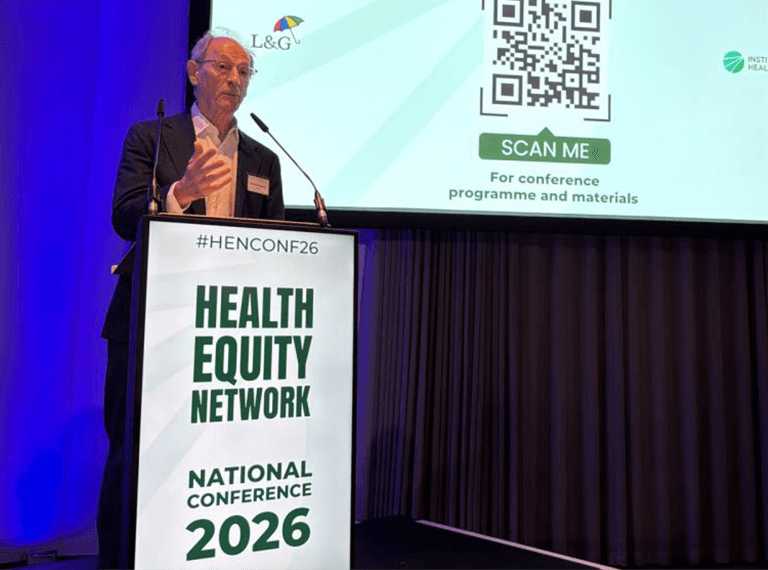

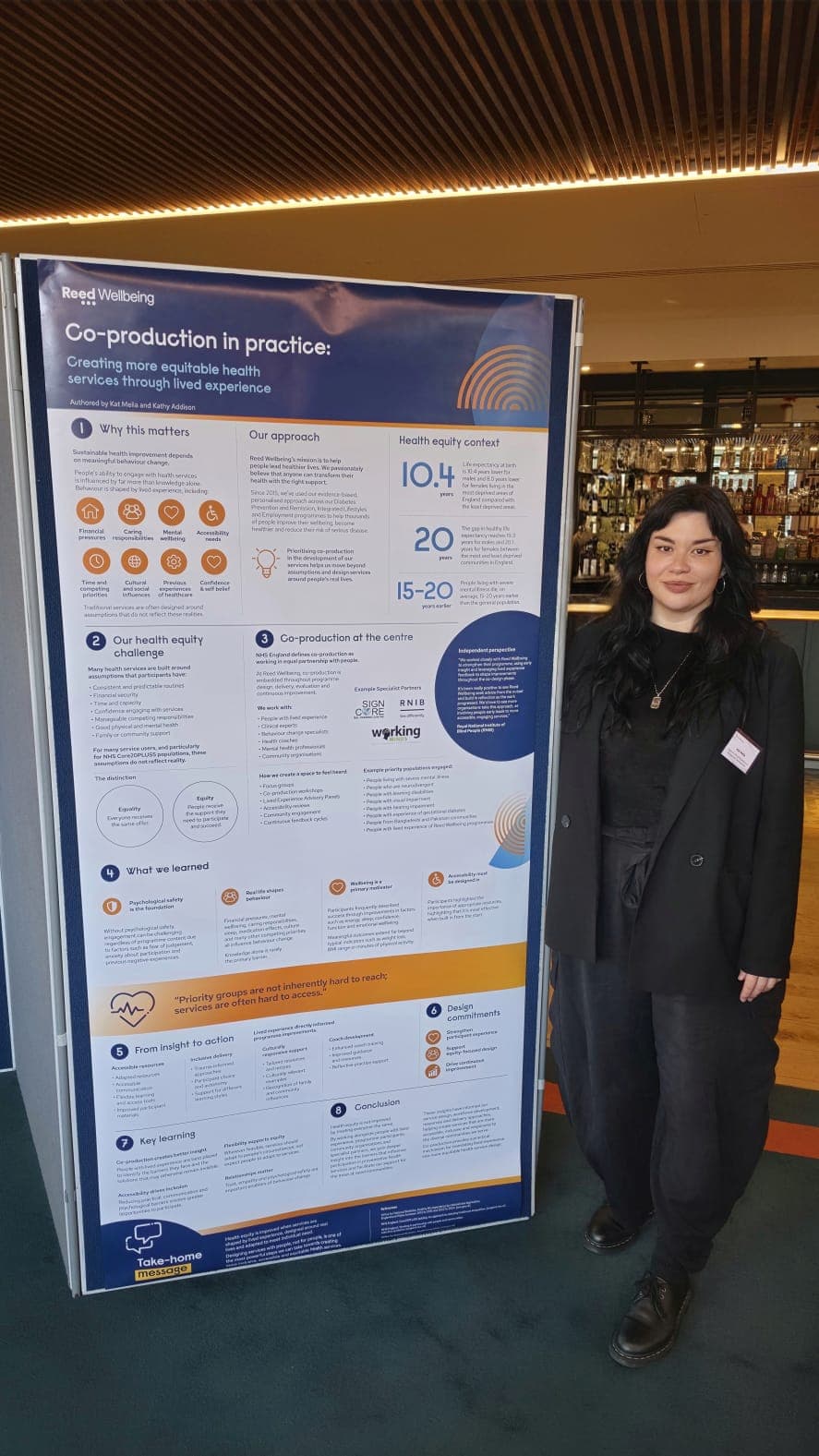
Attending the Health Equity Network's fourth annual National Conference was inspiring and thought-provoking. It was a privilege to present our poster, ‘Co-production in practice: Creating more equitable health services through lived experience’, and to engage with so many passionate professionals committed to reducing health inequalities across the UK.
The conference centred on the Marmot Principles, developed by Professor Sir Michael Marmot, whose pioneering work has transformed our understanding of the social determinants of health. At a time when inequalities continue to widen and communities face increasing social and economic pressures, the conference served as a reminder that health outcomes are shaped by much more than healthcare alone.
The workshops I attended were equally thought provoking. A session delivered by Clean Slate, exploring the relationship between job loss, low income and poor health, highlighted how financial insecurity can both contribute to and result from poor health and showcased practical, accessible and high impact approaches that can help individuals improve their financial wellbeing.
A workshop led by 42nd Street shone a spotlight on youth mental health, particularly among marginalised and radicalised populations. The session demonstrated the importance of creating safe, inclusive spaces for young people and highlighted innovative approaches to supporting emotional wellbeing through accessible, person-centred support.
Designing services around real lives
One of the central messages of our poster was that sustainable health improvement depends on meaningful behaviour change, and that behaviour is influenced by far more than knowledge alone. Financial pressures, mental wellbeing, caring responsibilities, accessibility needs, cultural influences and previous experiences of healthcare can all affect a person's ability to engage with services and achieve positive outcomes.
Too often, services are designed around assumptions that people have the time, confidence, financial security and support networks needed to engage. For many people, particularly those within NHS Core20PLUS5 populations and other underserved communities, this is simply not the case.
At Reed Wellbeing, we believe improving health equity means designing services around people's real lives rather than expecting people to adapt to the support available. Through co-production, we work alongside people with lived experience to better understand barriers to participation and identify solutions that might otherwise remain invisible. I'm incredibly grateful to the whole team for their dedication and collaboration, with special thanks to our Programme Development Manager, Kathy Addison, and our Dietitian, Grace Maher, whose vision and commitment have been instrumental in continually driving forward and embedding co-production and lived experience throughout our programmes.
The importance of lived experience
The conference reinforced something we see every day in our work: people with lived experience are often best placed to identify the challenges within services and the changes that will have the greatest impact.
Co-production is embedded throughout Reed Wellbeing's programme design, delivery, evaluation and continuous improvement. Through focus groups, workshops, accessibility reviews, advisory panels and ongoing feedback, we create opportunities for people to directly influence service design. This approach has helped us develop more accessible resources, improve communications and strengthen our delivery models.
On Thursday, we are launching our new report: ‘What works for people: A lived experience perspective on weight management services’. The report highlights how placing lived experience at the centre of service design and evaluation can help health and care systems develop more effective interventions that support long-term behaviour change and improved health outcomes.
Our poster presented at conference